The Parent Hack
What do we do when our children are in total meltdown or simply just restless? It is most convenient to just prop up our young ones with a device. But let's hit the pause button and rethink our actions as what we do today will affect them in the further future. The constant dopamine hit isn't going to help, it just numbs them.
It may take some initial effort (plus some tears) to find solutions outside of a device, but it will be totally worth it.
Try a Rabbit bag / Bag of Trix
Let's take an example from our dear friend Trixie, a mother of three. She's a homeschool mom and this is how she goes almost anywhere with the kids. Different activities are organized separately for ease of rotation, which she swaps them up every now and then to keep them fresh. Come up with your own combo. It can be anything to keep little hands busy and brains engaged with constructive play as we find ourselves in moments of waiting.
Scenario
1. Solving the 'But I'm bored!' dilemma

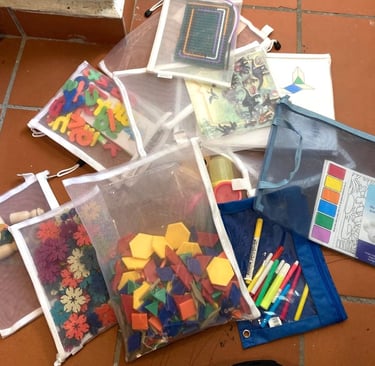
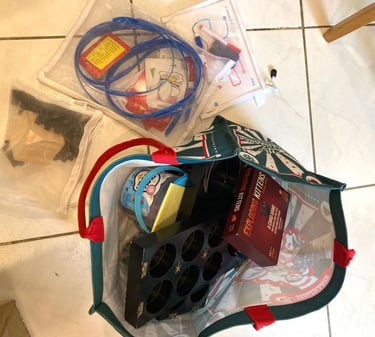
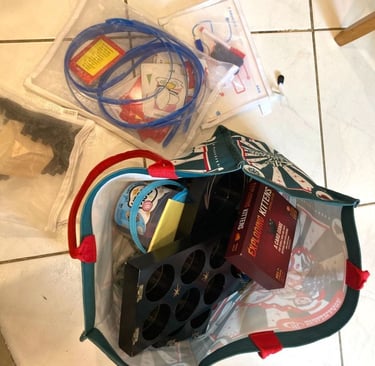
It won't be long before our child adjust to a new non-digital routine. Some may take just a weekend, some may take few weeks. But let's hold it out, JomUnplug Parent Pact is here to rally and cheer you on. With the bunny bag method, we don't ever have to worry about forgetting to bring along our device, and having to endure a full meltdown. The kids would be just fine with doodling on paper napkins. Win-win!
And reminder to the rest of us who are bystanders, let us also be symphathetic when a nearby child is acting up and give space or offer help to the young family.
If the children has gotten accustomed to a non-digital routine, allow them to experience boredom without immediate intervention, as it fosters creativity, problem-solving, and self-discovery. This can be a gift to their development, teaching them to self-entertain, build resilience, and become more independent.
Or do nothing.
For families that have decided on a screentime routine for their kids:
We need to start disassociating screen time with reward and consequences. Avoid statements such as "I'll take away your iPad if..." or "You'll be given a smartphone if....".
Screentime should not be given special status. Keep it neutral and treat screen-time just like any other activities such as going cycling or visiting grandparents.
Consciously frame your words. It's a fine line but you will master soon enough.
2. Association with Reward and Consequence
Reading. We may not see the full benefits when they are young but once our child starts to be able to read, it unlocks a whole lot of potential. Books can keep them occupied for hours.
Having said that not every child reads at the same pace and that is okay. They will eventually get there. Do our part today as a parent to inculcate a love for reading. Start early. Start young. Read aloud to them from infancy. It will serve us well.
3. The Secret of Reading
4. Parents with older kids
If you have older kids that have been given a phone, set clear boundaries. You may follow the recommended screen-time hours or set higher standards for your family.
Set up parental parameters on their device. But keep in mind many times our child's first exposure of harmful content may not even be from their own device. Be aware of their surroundings (bus rides, parks, tuition, friend's home), as they could be shown inappropriate content from someone else's device. Or viewed through a shared screen when on a whatsapp call. It is equally important to know their community and their circle of friends apart from what we do at home.
Another practical boundary is setting digital breaks in bigger blocks of time, such as no screens 2 hours before bed and 2 hours upon waking (how about 3?) - for everyone in the family. This helps safeguard the child (and ourselves) to frame our mind and fully live in the real world, engaging with real people, during the most crucial time of day.
Be a good model for our kids. Stow away our mobile phone after the urgent call or text. Let's take another step further to also be a good example when in the presence of all other kids. When outside, in the lift, anywhere a child is present.
We do not want these young minds to equate the mobile phone as an extension of the adult human hand; that it is a fundamental human faculty. Make conscious effort to put our devices away, in our pocket, in our bag. Get a watch to tell time.
If we must bring work home, avoid working on our laptop when the kids are around. We engage with them. Establish an early sleep routine for our children and work after they go to bed.
Stop and look at our child when they are speaking with us. Watch them when they are in sports training. We have no idea how many times they turn to look at us when they do something right or when they miss a goal. They would have loved to see their parents looking back at them.
Share your family digital habits with those who are in constant contact with your child (eg. helper or grandparent) to practice similar habits.
Every little conscious effort counts.
5. It starts with Us!
Activity ideas that aren't just fun, but also free! And very malaysian. Download now.